How to Store Silk Scarves So They Stay Smooth
Roll, fold or hang? How to store silk scarves without creases, fading or moth damage — at home and when traveling.
Silk is strong but delicate on the surface: sharp folds leave lines, light fades color and damp encourages mildew. Knowing how to store silk scarves properly is mostly a matter of a few simple habits, and they keep silk scarves looking new for years.
This guide explains why silk needs special care in storage, how to prepare a scarf before putting it away, the best ways to roll, fold or hang it, how to protect it from light, damp and pests, and how to bring it back to life when you take it out again.
Why silk needs careful storage
- Creases set: a sharp fold left for months can leave a permanent line, especially on satin and fine habotai.
- Light damages it: sunlight and strong artificial light fade dyes and can weaken the fiber over time.
- Residues linger: perspiration, perfume, deodorant and food traces can discolor silk if they are left in it.
- It is an animal fiber: like wool, silk is protein, so it can attract fabric pests when soiled.
Before you store silk scarves
- Untie every knot. Knots left in place for weeks create creases that are hard to remove.
- Let it air. Lay the scarf flat or drape it over a padded hanger for a few hours after wearing.
- Check for marks. Look along the edges and the area that sat against your neck.
- Clean it if needed, following the care label. Many silk scarves are dry clean only; others allow a gentle hand wash. Never store a stained scarf, because stains set over time.
- Make sure it is completely dry before it goes into a drawer or box.
Roll, fold or hang?
| Method | Pros | Cons |
|---|---|---|
| Roll | No creases; compact | Takes a moment |
| Loose fold with tissue | Easy to see in a drawer | Folds can mark over time |
| Hang over a padded bar | Quick access | Dust and light exposure |
Rolling is the best long-term option. Avoid clip hangers, which leave marks.
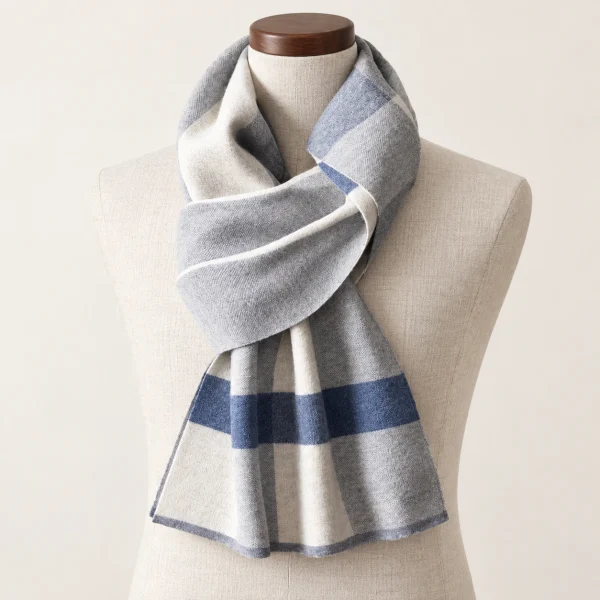
How to store silk scarves by rolling: step by step
- Make sure the scarf is clean — stains set over time.
- Lay it flat, place a sheet of acid-free tissue on top.
- Roll loosely around a cardboard tube or around itself.
- Store in a breathable cotton bag or a lidded box.
Wrap the cardboard tube in acid-free tissue first, so the silk never touches bare cardboard. Roll with the printed side facing out to reduce stress on the print, and keep the roll loose rather than tight. Long silk scarves can be folded once lengthwise before rolling; small squares can be rolled diagonally or folded once and rolled.
How to fold silk without lines
If you prefer folding, place a sheet of acid-free tissue in each fold to soften the crease, and fold as few times as possible. Store folded scarves flat in a single layer or a short stack, with the heaviest pieces at the bottom. Every few months, refold them along different lines so the same spots are not always under pressure.
How to hang silk scarves
Hanging is fine for the scarves you wear weekly. Use a smooth, padded or rounded bar so the silk drapes in a gentle curve, and keep the hanger inside a closet, away from windows. Avoid wire hangers, clips and narrow hooks, which leave marks or snag the fabric. For long-term storage, switch to rolling.
Light, heat and humidity
- Keep silk away from sunlight and strong lamps — they fade dyes.
- Avoid damp basements and hot attics.
- Don’t seal silk in plastic for months; it needs to breathe.
- Choose a closet or drawer on an interior wall where temperature and humidity stay steady.
Pests
Silk is an animal fiber, so moths and carpet beetles can damage it, especially when it is stained. Store it clean, with cedar or lavender, and check a few times a season.
Place cedar blocks or lavender sachets nearby rather than directly on the silk, and refresh them each season. Taking scarves out, shaking them gently and returning them disturbs pests, which prefer quiet, dark places.
Storing different kinds of silk scarves
- Twill squares and foulards: twill is relatively forgiving, but rolled hems can flatten if pressed under weight. Roll them loosely so the hems keep their shape. Read what is a foulard for more on this classic print.
- Satin and charmeuse: the shiny face shows creases easily, so rolling is strongly preferred.
- Long dress scarves: fold once lengthwise, then roll. These are the scarves men often wear under an overcoat; see how to wear a scarf with a suit.
- Silk blends: store according to the most delicate fiber in the mix, and use a moth deterrent if the blend includes wool or cashmere.
Seasonal rotation
Many men wear silk scarves mainly in spring and summer and switch to wool in winter. At each change of season, clean and roll the scarves you are putting away, and check the ones you are bringing out. For warm-weather styling, see summer scarves for men.
Organizing a silk scarf collection
- Store squares and long scarves separately, since they roll differently.
- Group by season or occasion: bright summer neckerchiefs in one place, darker dress scarves in another. Our neck scarf guide covers the small squares many men wear in warm weather.
- Keep the scarves you wear most at the front of a shallow drawer, rolled side by side so you can see each one.
- For valuable or sentimental scarves, use a lidded acid-free box and a note of when you last checked them.
Travel
Roll the scarf around a rolled T-shirt or inside a shirt collar. To remove creases, hang it in a steamy bathroom or iron on low through a cloth.
Taking silk scarves out of storage
Unroll the scarf and hang it for a while to let any soft creases fall out. For stubborn lines, use a handheld steamer from a short distance, or iron on the lowest silk setting with a pressing cloth, following the label. Avoid spraying silk directly with water, which can leave water spots on some silks. Then check the scarf in good light for any marks or damage before wearing it. For styling ideas, see how to wear a silk scarf.
Common mistakes
- Leaving it knotted: creases from a knot can be very hard to remove.
- Storing it after wearing perfume: residues can stain over time. Air it, and clean it if needed.
- Plastic bags and dry-cleaning covers: fine for the trip home, not for long-term storage.
- Displaying it in the sun: a scarf hung by a window will fade unevenly.
- Crushing it under heavier items: silk needs its own space at the top of a drawer or box.
FAQ
How do you store silk scarves without creasing?
Roll them loosely with acid-free tissue.
Can silk scarves be hung?
Yes, over a padded bar — but not with clips, and away from light.
Why acid-free tissue?
Ordinary tissue and cardboard can contain acids that may yellow or weaken delicate fabric over long periods. Acid-free tissue avoids that risk.
How often should I check stored silk scarves?
A few times a season is enough. Unroll them, look for marks or pests, and roll them again loosely.
Can I store a silk scarf in its original box?
Yes, if the box is clean, dry and not airtight. Add a sheet of acid-free tissue and keep it away from light and damp.
For wool and cashmere, see how to store scarves.
We sell wool scarves: the closest picks for this look
71 × 12 in · finished edges · free tracked US shipping · 30-day returns
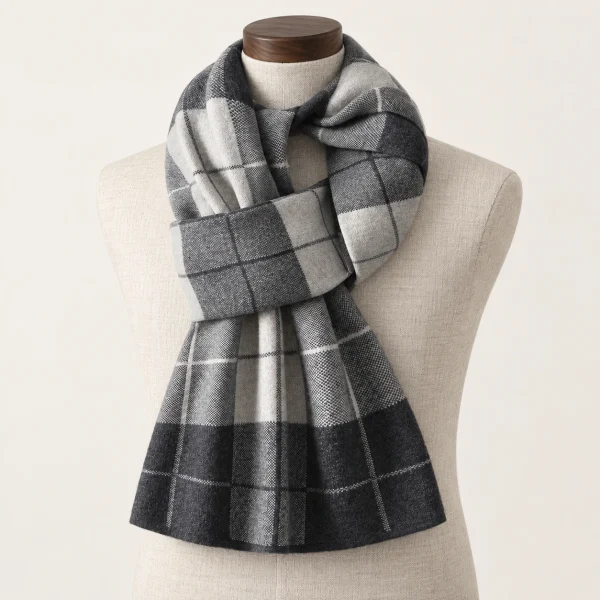 Light Gray Windowpane Reversible Wool Scarf$69.90Add to cart
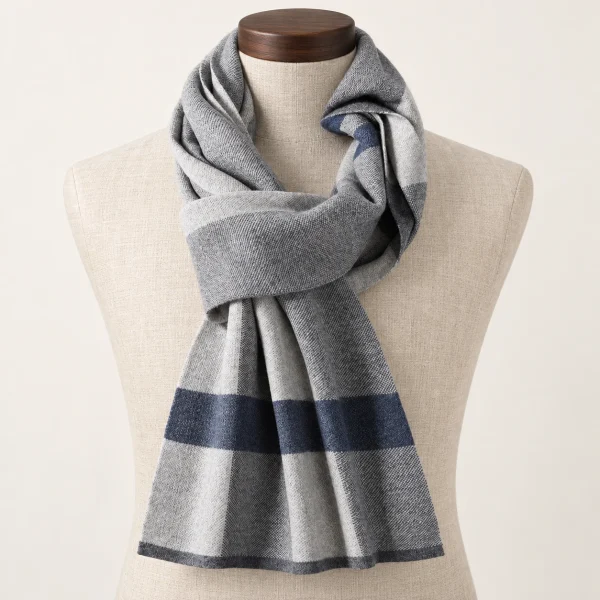 Ash Gray & Blue Stripe Wool-Blend Scarf$64.90Add to cart
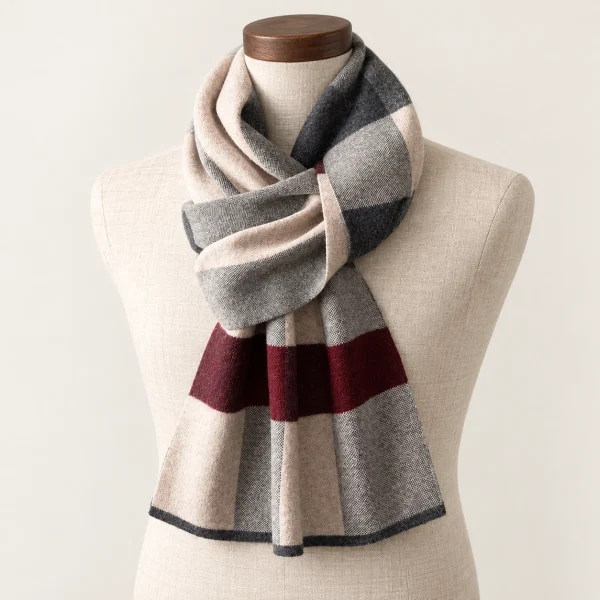 Beige & Burgundy Stripe Reversible Wool Scarf$69.90Add to cart
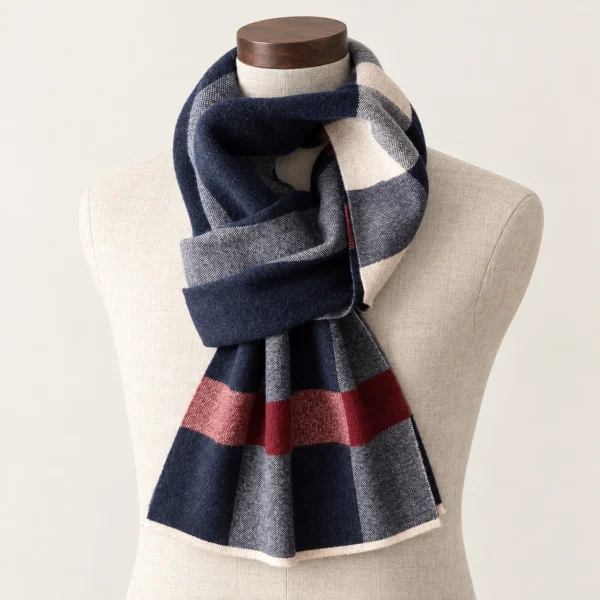 Navy & Rose Stripe Reversible Wool Scarf$69.90Add to cart