How to Keep a Scarf From Slipping (7 Simple Fixes)
Why scarves slip and seven easy ways to keep yours in place: knots, fabric, length, tucking and a couple of quiet tricks.
A scarf that keeps sliding off is annoying — and it usually comes down to three things: the knot, the fabric and the length. Fix those and most scarves stay put all day. If you have been wondering how to keep a scarf from slipping without constantly adjusting it, the seven fixes below cover almost every situation.
We start with why scarves slip, then go through each fix with steps, followed by solutions for specific situations such as windy commutes, backpacks and silk under a suit.
Why scarves slip
- No knot: a drape relies only on friction.
- Slippery fabric on a slippery coat: silk on a nylon parka is the worst combination.
- Uneven ends: the heavier end slowly pulls the scarf off.
- Too short: a short scarf cannot wrap or knot securely.
- Movement: turning your head, swinging a bag strap or cycling all tug at the scarf.
Quick fixes at a glance
| Problem | Quick fix |
|---|---|
| Scarf slides off one shoulder | Even out the ends or tuck the long one in |
| Knot loosens during the day | Switch to a Parisian knot with a twisted loop |
| Silk slides on a smooth coat | Tuck under the coat, use a scarf ring or a hidden pin |
| Scarf too short to knot | Wear it once around and tuck both ends in |
| Wind keeps pulling it loose | Twice-around, ends inside a buttoned coat |
1. Use a knot that locks
- Fold the scarf in half lengthwise: a loop at one end, tails at the other.
- Put it around your neck with the loop on one side.
- Pull both tails through the loop and slide it up to tighten.
The Parisian knot holds better than any drape because the tails pass through the loop.
- Fold the scarf in half to make a loop at one end.
- Place it around your neck with the loop on one side.
- Pull both tails through the loop.
- Slide the loop up until it sits snugly at your collar, firm but not tight.
For extra grip, give the loop a half twist before you pass the second tail through. The twist adds friction and keeps the knot from loosening in wind.
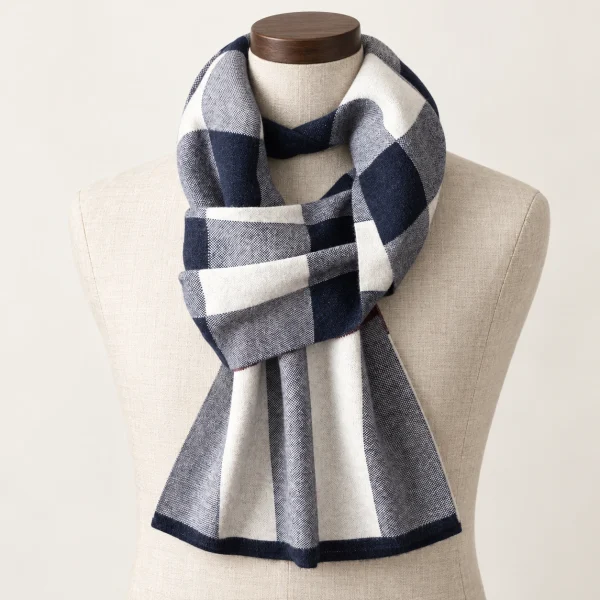
2. Wrap once (or twice)
- Start with one end much longer than the other.
- Wrap the long end around your neck twice.
- Even out the ends or tuck them into your coat.
Even one wrap around the neck adds friction. In real cold, the twice-around is both the warmest and the most secure.
Start with one end much longer, wrap it around twice, then even out the ends. The more fabric that crosses itself, the less the scarf can slide. More knots are explained in our guide on how to wear a scarf for men.
3. Even out the ends
When draping, make both ends the same length so neither side pulls the scarf down. Check again after you put on your coat and bag, because both can shift the balance. If you prefer an uneven look, tuck the longer end into your coat so its weight is supported.
4. Tuck the ends into your coat
Buttoning or zipping the coat over the ends holds the scarf in place and blocks the wind. With an overcoat, cross the ends at your chest before buttoning for an even firmer hold. With a zip-up jacket, zip to just below the knot so the collar pins the scarf without crushing it.
5. Choose a textured fabric
Wool, rib knits, brushed cashmere and cotton grip far better than silk. Save silk for indoors and calm days. Compare fabrics in best scarf material for winter.
Texture works on both sides: a ribbed knit grips itself in a knot, and a brushed surface grips a wool coat collar. If your coat is a slick technical fabric, a textured wool scarf makes the biggest difference. Our wool scarf guide explains the main knit and weave options.
6. Pick the right length
Around 70 inches gives you enough to knot or wrap securely. See men’s scarf length.
A scarf that is too long can also slip, because the extra weight of long, loose ends drags it down. If you have plenty of length, use it: wrap twice or tuck the ends in.
7. A discreet pin
For silk scarves under a coat, a small safety pin on the inside where the scarf crosses keeps everything in place without showing.
- Pin through the thickest overlap, not a single layer, to spread the strain.
- Use a small, smooth pin and slide it between the threads rather than forcing it through.
- On very fine silk, skip the pin and use a scarf ring instead, which holds the ends together without piercing the fabric.
How to keep a scarf from slipping in specific situations
- Windy commute: Parisian knot or twice-around, ends tucked into a buttoned coat.
- Cycling: wrap twice and tuck everything inside your jacket. Never leave long ends loose near wheels or chains.
- Backpack or messenger bag: put the bag on after the scarf and coat are settled, and tuck the ends under the straps so they do not get dragged.
- Silk under a suit: drape it flat, tuck the ends inside the jacket and let the overcoat hold it. See how to wear a scarf with a suit.
- Neckerchief that keeps loosening: use a square knot rather than a single overhand knot; our neck scarf guide shows how.
- Slick nylon parka: choose a textured knit and tuck it inside the zipped collar.
Let your coat collar help
A coat collar is a free anchor. Turning the collar up over a wrapped scarf traps it at the back of the neck, which stops it from riding down and keeps the wind out. Stand-up collars on parkas and zip jackets do the same when zipped to just below the knot. Shawl-collared and collarless coats give less support, so pair them with a locking knot rather than a drape. For more on combining scarves with heavy coats, see our guide to winter scarves for men.
Common mistakes when trying to keep a scarf from slipping
- Tying it too tight to stop slipping: it becomes uncomfortable and still shifts when you turn your head. Use a better knot instead.
- Relying on a loose drape in wind: drapes are for calm days and indoors.
- Ignoring the coat: a slippery coat lining or shell can undo any knot. Tuck the scarf inside.
- Constantly adjusting: every tug loosens the knot further. Set it properly once.
When it is the scarf, not you
Some scarves are simply hard to keep in place: very short ones, very slippery ones, or very heavy ones with long fringe. If you have tried every fix and a scarf still slides, save it for calm days or indoor wear and choose a medium-weight wool or cashmere scarf of around 70 inches for everyday use.
FAQ
Why does my silk scarf keep slipping?
Silk is smooth on both sides. Knot it, tuck it, or pin it discreetly.
Which scarf knot stays in place best?
The Parisian knot and the twice-around.
Can I use a scarf clip or ring?
Yes. A scarf ring holds two ends together without a knot and works well on silk. Choose one with smooth edges so it does not snag the fabric.
Does a heavier scarf stay on better?
Not always. A heavy scarf with long, loose ends can slide off under its own weight. Texture and a good knot matter more than weight.
How do I stop a scarf slipping on a leather jacket?
Leather is smooth, so use a wrapped style rather than a drape, and tuck the ends inside the jacket where the collar can hold them.
Try the knots on a mannequin in the Scarf Studio.
Wool scarves that stay put
71 × 12 in · finished edges · free tracked US shipping · 30-day returns
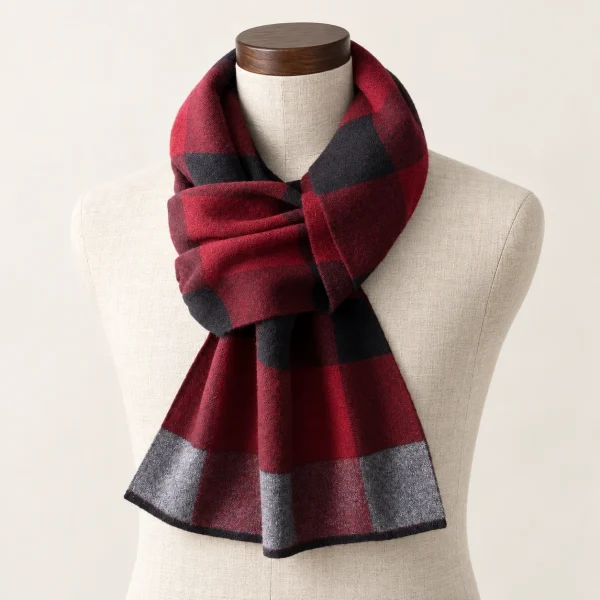 Wine Red Check Reversible Wool Scarf$69.90Add to cart
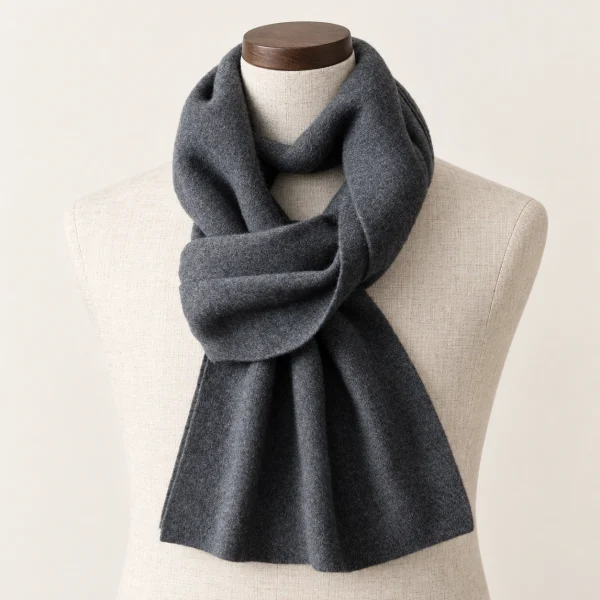 Solid Charcoal Reversible Wool Scarf$69.90Add to cart
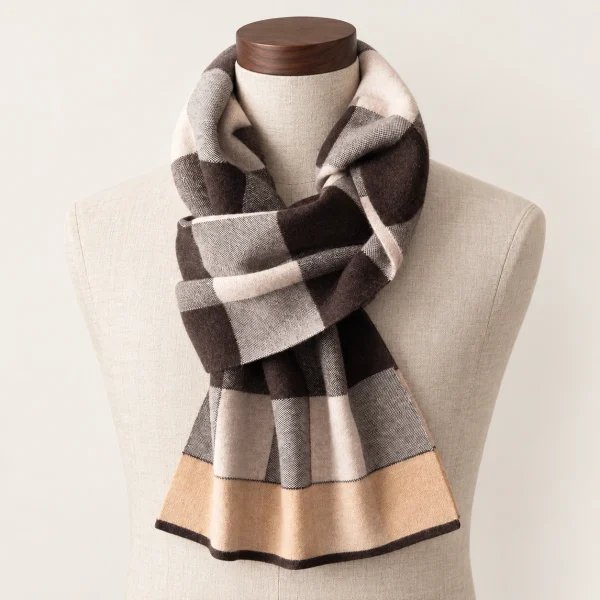 Chocolate & Camel Check Reversible Wool Scarf$69.90Add to cart
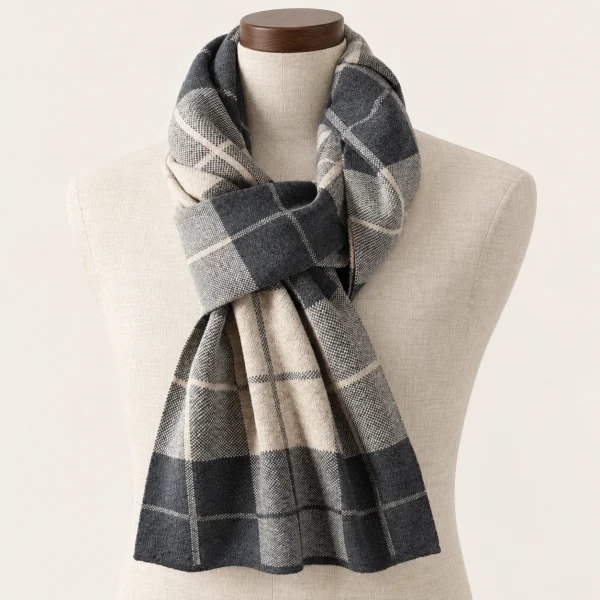 Camel Windowpane Wool-Blend Scarf$64.90Add to cart