Wedding Scarves for Men: What to Wear as Groom or Guest
Scarves for winter weddings: what the groom, groomsmen and guests should wear, which colors to choose and how to keep it formal.
A winter wedding means overcoats — and an overcoat almost asks for a scarf. Worn well, a wedding scarf looks elegant in photos; worn badly, it fights with the suit. Here is how to get wedding scarves for men right as the groom, a groomsman or a guest.
This guide covers the general rules, advice for each role, dress codes and seasons, how to tie and wear the scarf, what to do at the venue and the mistakes that show up in photos.
Wedding scarf rules of thumb
- Thin and smooth: silk, fine merino or cashmere lie flat over a suit.
- Formal colors: white or cream silk for evening, navy, charcoal, burgundy or the wedding palette for day.
- Simple knot: a drape or a neat Parisian knot. No chunky knits.
- Respect the dress code: the invitation and the couple’s wishes come first.
For the groom
A white or ivory silk scarf over a dark overcoat is the most formal and photographs beautifully. For a rustic or daytime wedding, a fine cashmere in a color from the wedding palette works well. See how to wear a silk scarf.
Coordinate with your partner and the overall look rather than choosing in isolation. If you will wear a boutonniere, check that the scarf and coat do not cover or crush it; with an open overcoat, a flat drape leaves the lapel clear. Ivory often photographs softer than bright white, which can look stark in daylight.
For groomsmen
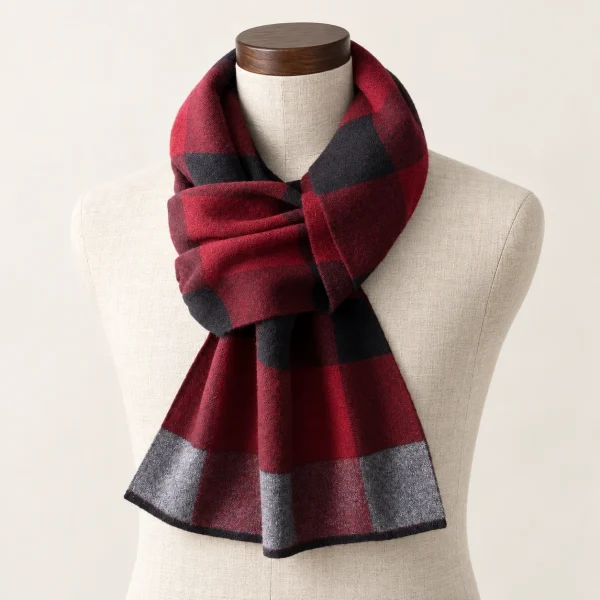
Matching scarves are a simple way to tie the group together and make a lasting gift. Pick one color from the palette — burgundy, forest green and navy are easy on everyone.
- Matching or coordinated: identical scarves look crisp in group photos; coordinated shades of one color feel more relaxed.
- Same length and fabric: otherwise the drapes hang at different heights in a line-up.
- Order early: leave time for any exchanges and for checking that every scarf matches.
- Keep it versatile: a fine cashmere or merino in a classic color will be worn long after the wedding. Our cashmere scarf guide explains what to look for.
For fathers and close family
Fathers of the couple and other close family members often appear in many formal photos, so a scarf matters more than it might for other guests. Choose something that sits in the same family as the wedding palette, such as navy or charcoal cashmere for a dark-suited party, or a soft camel for a warm-toned palette. Keep it understated; the couple should stand out, and a classic scarf will still look right in photos years later.
For guests
Avoid white (it can read as matching the couple) and very bright colors. Navy, gray, burgundy and camel are always appropriate.
If the couple has shared a color palette or the wedding follows particular cultural traditions, take your cue from that. When in doubt, a dark, plain scarf in fine wool or cashmere is never wrong.
+ burgundy
+ camel
+ navy check
+ gray herringbone
+ cream
+ red
Contrast beats matching: go a shade lighter or darker than the coat.
For broader color advice, see what color scarf should a man wear.
How to wear a wedding scarf: the drape
- Hold the scarf by its middle so both ends are even.
- Place the middle behind your neck.
- Let both ends fall straight down the front. No knot.
- Put on your suit jacket and overcoat first.
- Hang the scarf around the back of your neck, under the coat collar.
- Let both ends fall evenly down the front, flat over the jacket lapels.
- Button the overcoat over the scarf, or leave it open with the ends framing the jacket.
On a cold, windy day, a neat Parisian knot keeps you warmer while still looking formal. Step-by-step instructions are in our guide on how to wear a scarf for men, and fit tips are in how to wear a scarf with a suit.
Scarves by dress code
| Dress code | Scarf | How to wear it |
|---|---|---|
| Black tie | White or ivory silk | Flat drape under a dark overcoat |
| Formal / cocktail | Fine silk, cashmere or merino in a dark or palette color | Drape or neat Parisian knot |
| Semi-formal daytime | Cashmere or merino in navy, gray, camel or burgundy | Drape or once-around |
| Rustic or outdoor | Fine wool, possibly a subtle check | Parisian knot for warmth |
| Summer or destination | Usually none; perhaps a light silk neckerchief if the dress code is relaxed | Small knot at an open collar |
Choosing a fabric for a wedding scarf
- Silk: the most formal, with a sheen that suits evening light. Best for black tie and dressy evening weddings.
- Cashmere: soft, warm and refined, ideal for winter weddings and outdoor photos.
- Fine merino: smooth and warm, and easier to look after than cashmere.
- Chunky wool and fleece: save them for the drive home; they are too casual for most weddings.
Whatever you choose, it should be thin enough to lie flat under your overcoat collar without pushing the lapels out of shape.
Wedding scarves by season
- Winter: the natural season for a scarf. Cashmere or fine merino, worn outdoors and for photos.
- Fall and early spring: a lighter cashmere or silk scarf for cool evenings and outdoor portraits.
- Summer: skip the outdoor scarf. If the dress code is relaxed, a small silk neckerchief can replace a tie; see our neck scarf guide.
Inside the venue
Scarves are outerwear: take it off with your coat for the ceremony and dinner, unless the venue is cold or outdoors.
For an outdoor ceremony in cold weather, keep the scarf on, folded flat and tucked into a buttoned coat, so it looks neat in photos. Have a plan for where it goes when you take it off, such as a coat check or folded in a coat pocket, so it does not end up crumpled on a chair.
Looking good in wedding photos
- Steam or press the scarf the day before, following the label.
- Check that both ends of a drape hang evenly before formal portraits.
- Keep the scarf flat; a bunched collar looks messy in close-ups.
- Carry a small lint roller, especially with dark coats and fluffy scarves.
Wedding scarf checklist
- Color agreed with the couple’s palette or the dress code.
- Fine, smooth fabric that lies flat.
- Pressed or steamed and free of lint.
- Length that suits a simple drape.
- A plan for where it goes when you take off your coat.
Common mistakes
- Chunky knits: too casual and bulky for wedding tailoring.
- Guests in white: leave white and ivory to the couple unless they have asked for it.
- Loud novelty patterns: they draw attention away from the occasion.
- Keeping a heavy scarf on indoors: it looks like you have just arrived.
- Mismatched groomsmen scarves: different lengths or shades look accidental.
FAQ
Can a groom wear a scarf?
Yes — a silk or cashmere scarf over the overcoat is classic for winter weddings.
What scarf color should a wedding guest wear?
Navy, gray, burgundy or camel; avoid white.
Should the groom’s scarf match the groomsmen’s?
It can, but many grooms wear a slightly different color or fabric, such as ivory silk while groomsmen wear navy cashmere, to stand out subtly.
Is a scarf appropriate for a summer wedding?
An outdoor winter-style scarf is not needed. A light silk neckerchief can work at a relaxed summer wedding if the dress code allows it.
Are scarves good groomsmen gifts?
Yes. A fine cashmere or merino scarf in a classic color is useful long after the wedding.
Also see how to wear a scarf with a suit.
Shop our wool scarves
71 × 12 in · finished edges · free tracked US shipping · 30-day returns
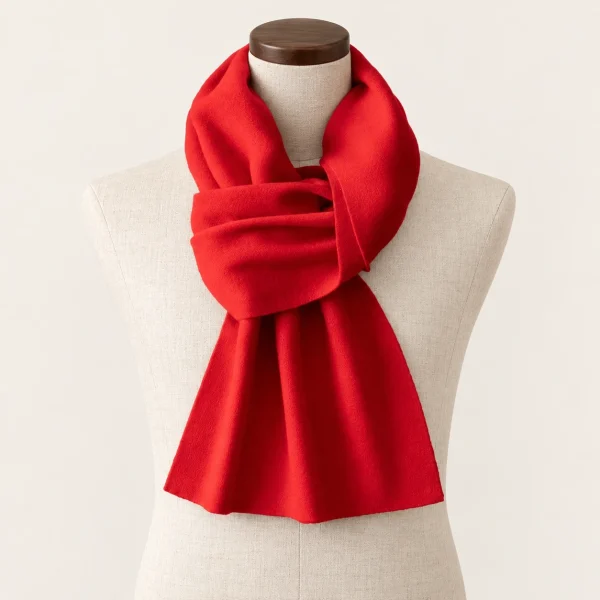 Scarlet Red Reversible Wool Scarf$69.90Add to cart
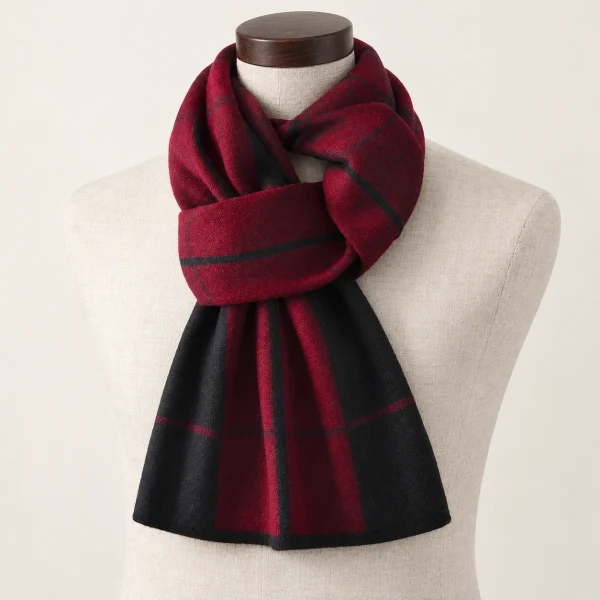 Red & Black Check Reversible Wool Scarf$69.90Add to cart
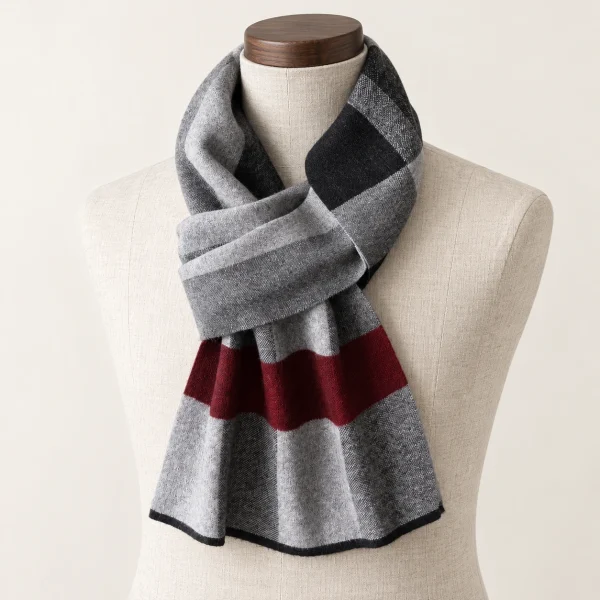 Gray & Burgundy Stripe Reversible Wool Scarf$69.90Add to cart
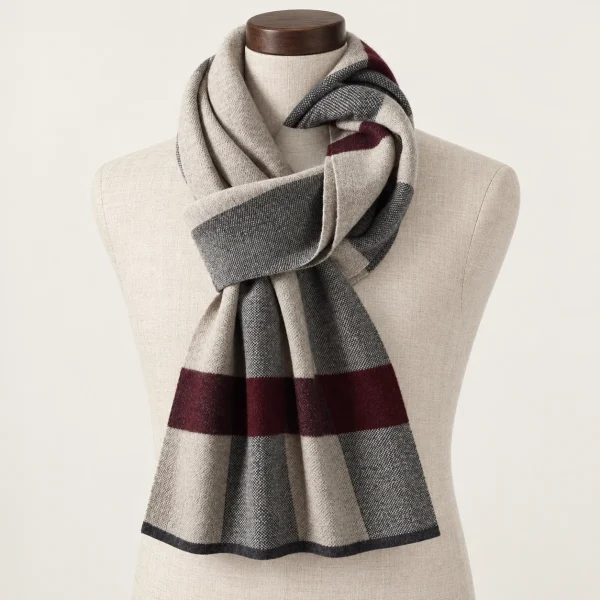 Oatmeal & Burgundy Stripe Wool-Blend Scarf$64.90Add to cart