Green, Brown and Purple Scarves for Men
How to wear forest and emerald green, chocolate and camel brown, and plum or aubergine scarves — with coat pairings.
Once you own a navy or gray scarf, green, brown and purple are the next step: still easy to wear, but with more personality. The trick is choosing deep, muted shades. Green, brown and purple scarves for men work with the same neutral coats you already own, and they bring warmth and depth that pure neutrals cannot.
This guide covers the best shades of each color, coat pairings, outfit ideas, how fabric and season change the effect, and the mistakes that make a color look costume-like.
Green scarves
- Forest and bottle green: the most versatile — great with camel, navy, charcoal and brown.
- Emerald: brighter and richer; striking against black and charcoal.
- Olive: casual and earthy, ideal with denim and brown leather.
- Sage: a soft, grayish green that suits spring and lighter coats.
Green is the easiest of the three to start with. A deep forest green reads almost as a neutral in winter, yet it adds noticeably more life than navy. It looks especially good against camel coats and tweed jackets, and it pairs naturally with brown leather shoes and gloves.
Brown scarves
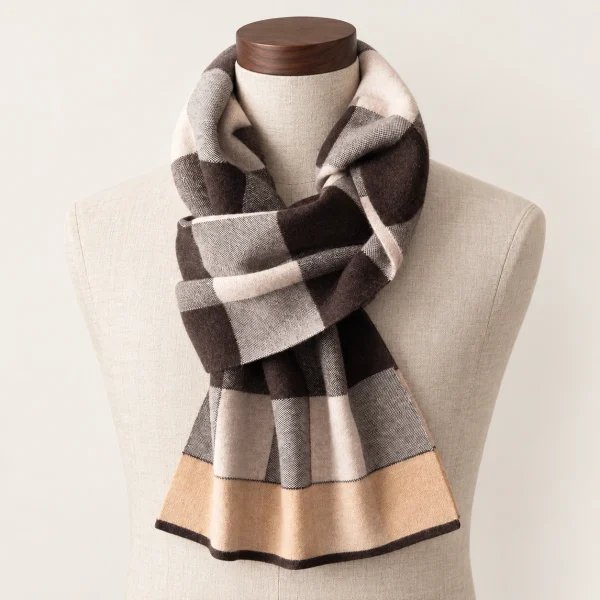
- Camel: classic with navy, gray and black coats.
- Chocolate: works with tan, olive and cream.
- Rust / tobacco: autumnal and warm; pair with navy and olive.
- Taupe and mushroom: soft gray-browns that sit quietly with charcoal and stone.
Brown scarves bring warmth to cool-toned coats. Camel is the dressiest, especially in cashmere; rust and tobacco feel relaxed and seasonal. A chocolate brown scarf is a subtle alternative to black for men who find black too harsh near the face.
Purple scarves
- Plum and aubergine: deep purples that behave almost like burgundy — elegant with charcoal and navy.
- Lilac and lavender: lighter; better in spring silks and cottons.
Purple is the boldest choice here, but deep plum is surprisingly easy. It sits between burgundy and navy, so it works with the same coats as both. Save lighter purples for warmer months, when they look fresh in silk or cotton rather than heavy wool. For lighter fabrics, see summer scarves for men.
Why deep shades work best
Deep, muted colors behave like neutrals with a twist. They have enough depth to sit comfortably against dark winter coats, yet enough color to lift an outfit. Bright, saturated versions of the same hues tend to fight with other colors and look seasonal or sporty. If you are building confidence with color, start dark and muted, then move lighter or brighter once you know what you like.
Pairing cheat sheet
| Scarf | Coat |
|---|---|
| Forest green | Camel, navy, charcoal |
| Emerald green | Black, charcoal |
| Olive | Navy, brown, denim |
| Camel | Navy, gray, black |
| Chocolate brown | Tan, olive, cream |
| Rust | Navy, olive, charcoal |
| Plum | Charcoal, navy, gray |
+ burgundy
+ camel
+ navy check
+ gray herringbone
+ cream
+ red
Contrast beats matching: go a shade lighter or darker than the coat.
How to wear a green, brown or purple scarf: the Parisian knot
- Fold the scarf in half lengthwise: a loop at one end, tails at the other.
- Put it around your neck with the loop on one side.
- Pull both tails through the loop and slide it up to tighten.
Keep the coat and trousers neutral, and let the scarf be the only color near your face. A compact knot keeps it neat.
- Fold the scarf in half lengthwise to make a loop.
- Place it around your neck with the loop on one side and the tails on the other.
- Pull both tails through the loop and slide it up to close the collar.
The folded knot shows a concentrated band of color right under your chin, which is exactly where a richer shade does its best work. For other knots, see how to wear a scarf for men.
Outfit ideas
- Office: charcoal overcoat, navy suit, plum cashmere scarf.
- Weekend: camel coat, cream sweater, jeans, forest green wool scarf.
- Fall walk: waxed jacket, flannel shirt, rust or tobacco knit scarf.
- Evening: black overcoat, dark suit, emerald silk or cashmere scarf.
- Casual city: navy peacoat, gray hoodie, olive rib-knit scarf.
More combinations in men’s scarf fashion.
Green, brown and purple scarves by occasion
- Business: forest green, camel and plum in fine wool or cashmere all look professional with navy and charcoal tailoring.
- Interviews: camel or a very deep green, which add warmth without drawing attention.
- Weekends: olive, rust and tobacco in textured knits, worn with denim and field jackets.
- Holidays and evenings: emerald or aubergine in cashmere or silk, against a dark coat.
- Outdoor days: olive and brown hide dirt and look natural with outdoor gear.
Fabric changes the color
The same shade looks different in different fibers. Brushed wool and cashmere soften strong colors, making emerald or plum easier to wear. Silk makes colors brighter and more saturated, so a purple silk scarf reads bolder than purple wool. Chunky knits add shadow and depth. If you are unsure about a color, try it in a soft, matte wool first. Our wool scarf guide and cashmere scarf guide explain the fabrics.
Patterns that combine these colors
Green, brown and purple appear together in many traditional patterns. Tweeds often mix brown with green or purple flecks; checks combine forest green with navy or camel; heathered yarns blend several shades into one soft color. A patterned scarf that includes one of these colors is a gentle way to try it before committing to a solid.
Matching colors to your coloring
Warm complexions and red or brown hair often glow in olive, rust, camel and chocolate. Cooler complexions often suit emerald, bottle green and plum. If you have gray hair, deep greens and plums can look especially distinguished. As always, hold the scarf under your chin in daylight to check.
Building a color rotation
A simple rotation of three or four scarves covers most of winter. Start with a navy or charcoal neutral, then add one warm color from this guide, such as camel or rust, and one cool or deep color, such as forest green or plum. Because all of them work with navy, gray and camel coats, you can grab any scarf in the morning without rethinking the outfit. Our guide to the best scarves for men explains how to choose materials and sizes alongside colors.
Caring for richly colored scarves
Deep greens, browns and purples can fade if left in sunlight, so store them in a drawer or closet rather than on an open hook by a window. Some strong dyes may release a little color in the first few washes; follow the label and wash them separately or with similar colors when washing is allowed. Dry flat away from direct heat and sun to keep the color even.
Common mistakes
- Bright shades in winter wool: lime green or bright violet can look loud. Choose deep, muted versions.
- Two strong colors at once: a purple scarf with a green coat competes. Keep the coat neutral.
- Brown on a nearly identical brown coat: the scarf disappears. Choose a lighter or darker shade.
- Ignoring shoes and gloves: brown and green look best with brown leather; plum works with brown or black.
FAQ
Can men wear a purple scarf?
Yes — deep plum or aubergine with a charcoal or navy coat looks refined.
What goes with a green scarf?
Camel, navy, charcoal and brown.
Does a brown scarf go with a black coat?
Camel does, and it is a classic combination. Darker browns can look muddy against black, so keep the contrast clear.
Which of these colors is easiest to start with?
Forest green or camel. Both work with most coats and suit most complexions.
Are these colors only for fall and winter?
Deep shades in wool feel autumnal, but sage, lilac and light browns in cotton or silk work well in spring and summer.
See also what color scarf should a man wear.
Scarves in deep colors
71 × 12 in · finished edges · free tracked US shipping · 30-day returns
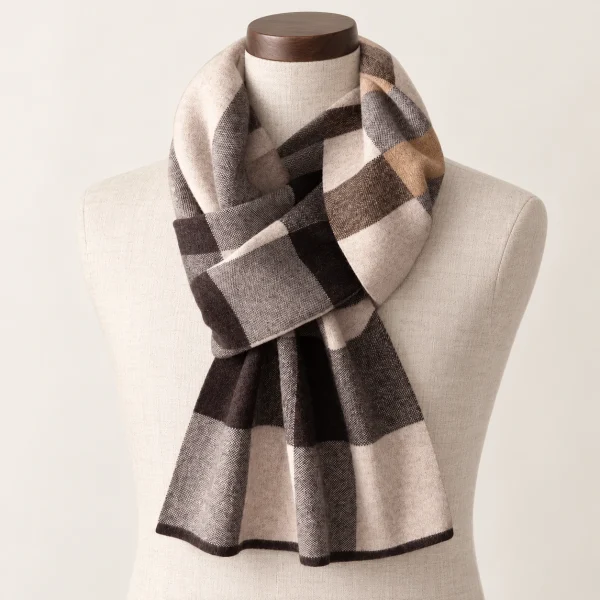 Coffee & Khaki Check Reversible Wool Scarf$69.90Add to cart
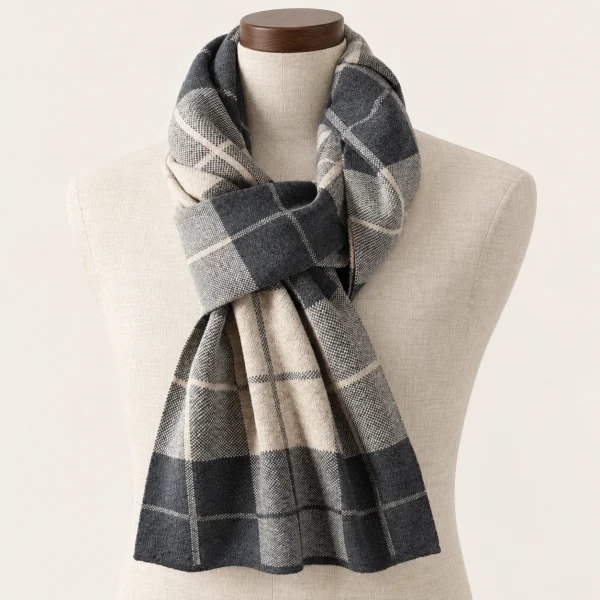 Camel Windowpane Wool-Blend Scarf$64.90Add to cart
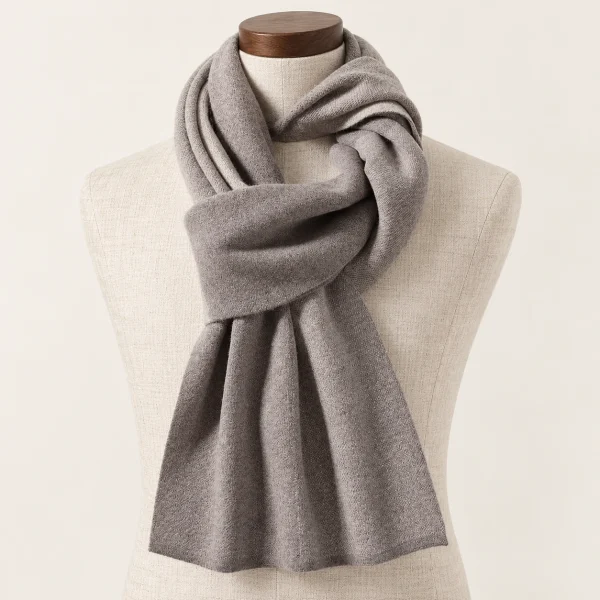 Taupe Wool-Blend Scarf$64.90Add to cart
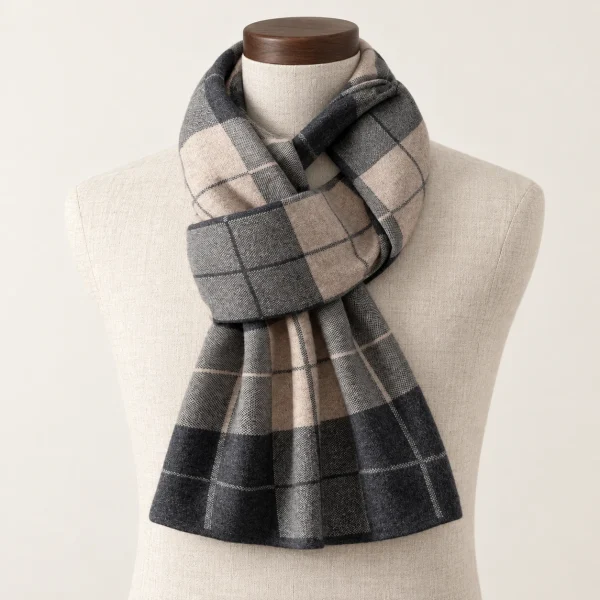 Oatmeal Windowpane Reversible Wool Scarf$69.90Add to cart