Silk-Wool Scarves: The Best of Both Fibers
How a silk and wool blend combines warmth with sheen, when to choose one, and how to look after it.
A silk-wool scarf blends two fibers with opposite strengths: wool brings warmth and body, silk brings smoothness, drape and a soft sheen. The result is a scarf that is warmer than silk and dressier than wool — a very useful in-between. Silk-wool scarves are especially handy for men who wear a scarf with tailoring, live with mild winters or want one scarf that covers three seasons.
This guide explains what each fiber contributes, how blend ratios change the feel, when to choose silk-wool over alternatives, how to wear it and how to care for it.
How the blend behaves
| Pure wool | Silk-wool blend | Pure silk | |
|---|---|---|---|
| Warmth | High | Medium | Low |
| Sheen | Matte | Soft sheen | High |
| Drape | Full | Fluid | Very fluid |
| Feel on the neck | Can itch (depends on wool) | Smooth | Very smooth |
| Best season | Winter | Fall, spring, mild winter | Spring, summer |
The ratio matters: more wool means more warmth; more silk means more sheen and a lighter feel. Check the label for the percentages.
Warm, durable, the everyday winter standard. All our scarves are wool or wool blends.
Shop wool scarves →CashmereGuide · Warmth ●●●●Very soft and light for its warmth. How to judge quality before you buy.
Read the cashmere guide →SilkGuide · Warmth ●○○○Light with a natural sheen. Under a lapel or an open collar.
Read the silk guide →CottonGuide · Warmth ●●○○Breathable and washable, for spring, fall and mild climates.
Read the cotton guide →What each fiber brings to a silk-wool scarf
Wool
Wool fibers have a natural crimp that traps air, which is where most of the blend’s warmth comes from. Wool also gives the fabric spring and body, so the scarf holds a knot and recovers from creases. Fine wools such as merino are the usual partner for silk because they keep the surface soft. Learn more in our wool scarf guide.
Silk
Silk is a smooth, strong protein fiber with a natural luster. In a blend it smooths the surface, adds a gentle sheen and makes the fabric drape more fluidly. It also lightens the overall weight, so a silk-wool scarf feels less bulky than an all-wool scarf of similar size.
Understanding blend ratios
You will see blends such as 70% wool and 30% silk, an even 50/50 split, or mostly silk with a smaller share of wool. As a rough guide:
- Wool-dominant blends: warmer, more matte, with a little extra smoothness. Good for late fall and mild winters.
- Even blends: a balance of warmth and sheen, the most versatile choice.
- Silk-dominant blends: lighter and shinier, closer to a silk scarf with a touch of warmth. Best for spring, fall and evenings.
Weight and weave matter too. A dense twill feels warmer than a light, open weave with the same fiber ratio.
When to choose a silk-wool scarf
- You wear a scarf with a suit and want something thin but not cold.
- Pure wool feels itchy on your neck.
- You want a printed pattern (silk-wool takes prints well) in cooler weather.
- You travel and want one light scarf that works from a chilly plane to a mild evening.
- You live where winters are mild and a thick scarf would be too warm.
Who might prefer something else
A silk-wool scarf is not the best tool for every job. If you spend long hours outdoors in hard winters, a thick wool or cashmere scarf will keep you warmer. If you want a scarf you can wash in a machine after every few wears, cotton or a machine-washable merino is easier. And if you love a rugged, textured look, the smooth sheen of silk-wool may feel too polished. For most other situations, especially with tailoring, it is a strong choice.
Silk-wool scarves through the year
- Fall: the blend’s best season. Wear it once around with a light coat or tweed jacket.
- Winter: drape it under a heavy overcoat for a dressy look, or switch to wool on the coldest days.
- Spring: a lighter, silk-dominant blend works with a trench coat on cool mornings.
- Summer: usually too warm in daytime heat, but a light silk-wool scarf can be welcome on cool evenings or in heavily air-conditioned spaces.
Silk-wool vs other blends
| Blend | Feel | Best for |
|---|---|---|
| Silk-wool | Smooth, light sheen, medium warmth | Suits, prints, three-season wear |
| Silk-cashmere | Very soft, light, subtle sheen | Dressy scarves, gifts |
| Wool-cashmere | Soft, matte, warmer | Everyday winter |
| Fine merino | Soft, matte, springy | All-round, easy care |
For more on cashmere and its blends, see our cashmere scarf guide.
How to wear a silk-wool scarf
- Hold the scarf by its middle so both ends are even.
- Place the middle behind your neck.
- Let both ends fall straight down the front. No knot.
A silk-wool scarf drapes beautifully, so keep the knot simple.
- Hang the scarf around the back of your neck.
- Let both ends fall down the front, slightly uneven for a relaxed look or even for a formal one.
- Close your coat over the ends, or leave it open to show the pattern.
On colder days, a loose once-around or a Parisian knot works well, because the blend is thin enough not to bunch. With tailoring, the drape is hard to beat; see how to wear a scarf with a suit. For more knots, read how to wear a scarf for men.
Patterns and colors
Silk-wool takes printed color well, so it is a natural home for paisleys, small geometric foulard prints and soft checks. Navy, burgundy, forest green and deep brown grounds are the easiest to wear. If the term is new to you, read what is a foulard.
Size and weight
Most silk-wool scarves are long rectangles that suit draping and simple knots. Because the blend is thin, a slightly wider scarf still folds neatly under a collar. If you plan to wrap it more than once, check the length first; our men’s scarf length guide shows how to measure one you already own.
Outfit ideas
- Office: charcoal suit, navy overcoat, burgundy paisley silk-wool scarf draped flat.
- Smart casual: tweed jacket, open-collar shirt, green foulard-print silk-wool scarf once around.
- Travel: navy knit jacket, chinos, a solid gray silk-wool scarf that rolls small in a bag.
Care
- Follow the label — many silk-wool scarves are hand wash or dry clean.
- Use cool water and a gentle wool or silk detergent; no wringing.
- Dry flat, iron low through a cloth if needed.
- Store folded or rolled, away from light. See how to store scarves.
- Both fibers are animal fibers, so store the scarf clean, with a moth deterrent.
Common mistakes
- Treating it like pure wool in the wash: silk needs gentle handling too, so follow the label rather than a wool routine.
- Spraying cologne on it: fragrance can mark silk. Apply it first and let it dry.
- Tying a tight knot: the blend’s drape looks best loose.
- Expecting deep-winter warmth from a light blend: check the weight and ratio if warmth is your priority.
What to check before buying
- The exact percentages of silk and wool.
- The type of wool, if stated.
- Weight and weave: hold it to the light to judge density.
- Edges: neat hems or secure fringe.
- Care instructions you can follow.
FAQ
Is a silk-wool scarf warm?
Warmer than silk, less warm than a thick wool scarf — ideal for fall and mild winters.
Does silk-wool itch?
Usually much less than pure wool, because the silk smooths the surface.
Can I wear a silk-wool scarf in deep winter?
As a dressy layer under a heavy coat, yes. For long periods outdoors in real cold, a thick wool or cashmere scarf is warmer.
Is silk-wool good for printed scarves?
Yes. The silk helps prints look crisp and rich, which is why many patterned scarves use this blend.
Does a silk-wool scarf wrinkle?
Less than pure silk, because the wool gives the fabric some spring. Hanging it for a while after wearing usually lets light creases fall out.
Can I machine wash a silk-wool scarf?
Only if the label allows it. Most need hand washing or dry cleaning to protect both fibers.
Shop our wool scarves
71 × 12 in · finished edges · free tracked US shipping · 30-day returns
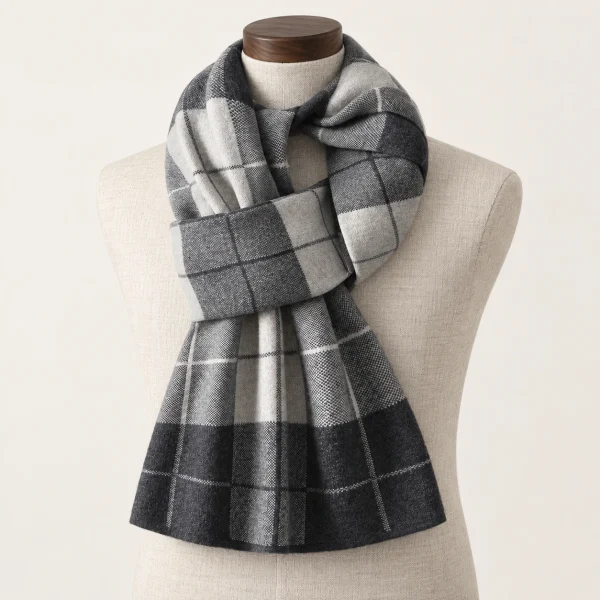 Light Gray Windowpane Reversible Wool Scarf$69.90Add to cart
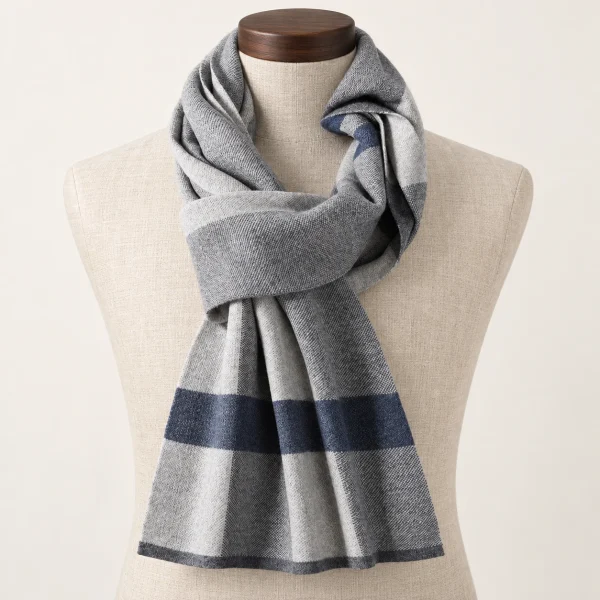 Ash Gray & Blue Stripe Wool-Blend Scarf$64.90Add to cart
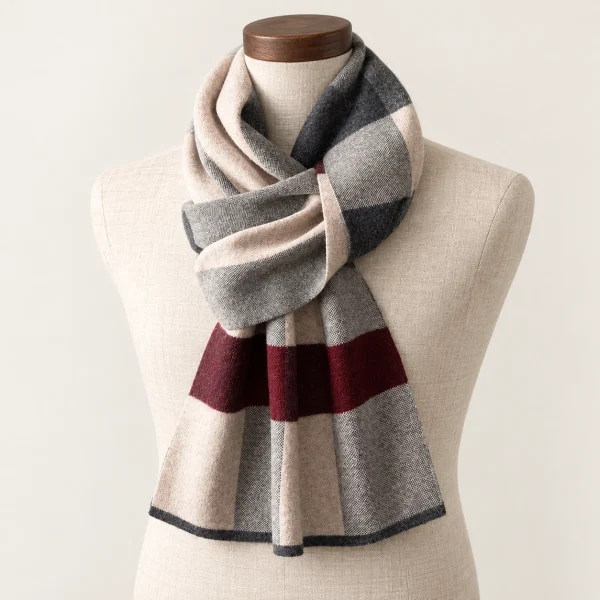 Beige & Burgundy Stripe Reversible Wool Scarf$69.90Add to cart
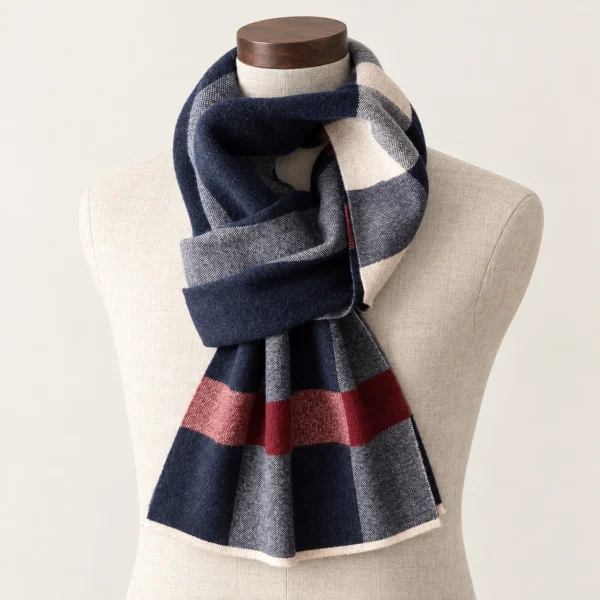 Navy & Rose Stripe Reversible Wool Scarf$69.90Add to cart